Orium | Overview

Turning two-month project starts into working storefronts in days

A reusable composable commerce foundation built from a decade of bespoke experience.
2020–2023
Product design lead
Composable commerce
Design systems

;tldr

Summary

I helped turn a decade of bespoke commerce expertise into a sellable product: a reusable, microservices-based foundation that gave every client a strong starting point without locking them into a single stack. I defined what was reusable, set the standards, and validated each pattern with the teams who would build on it.

Problem

Every engagement started with a roughly two-month discovery that re-derived the same patterns from scratch. The pieces and connectors existed, but the frame didn't. And because the point of composable is that every brand composes a different stack, a fixed template wouldn't do: the foundation had to be reusable and adaptable at once. Anything could be built, so nothing was specified.

Solution

Productize the knowledge, not just the code. I made the design system and experience patterns the definition of the product: what every client started with, what could be customized, and what had to stay swappable so a brand could bring their own search, CMS, ERP, or ecommerce engine without the experience being rebuilt. Then I helped build the practice that let the rest of the company ship on it.

My role

Founding design lead on the accelerator product team, and design owner for the design system. I defined product requirements alongside engineering, set the accessibility and responsive standards every pattern had to meet, owned the Figma design kit and experience patterns, and mentored the design squad so they could contribute back with every client build. I evolved the product from its early experiment through three years of iteration, expansion, and adoption.
Impact

Scale

40+

client deployments on the foundation to date, per Orium

Leadership

3 years

shaping the product, ending with 100% of frontend components ingesting design tokens

Time-to-market

2 months → days

from project start to a working storefront, measured at my departure

Laptop screen showing a form to add a first partnering listing with an Add listing button.

Five big takeaways

Defining the product

The question was what every client should start with

Defining exactly what a client received, and what was customizable, was like writing Lego instructions when anything could be built.We didn't start with a product spec. We had proven patterns, integrations, and client experience, but no agreement on what the reusable product should be. I worked with engineering to get each pluggable service's constraints out of their heads, and used live client work to test where the line between reusable and bespoke belonged, and where the foundation had to stay open so a brand could swap a service without rebuilding the experience.

Define the product

Engineering knew what could be built. Design had to define what customers actually received. I led that work until we hired a head of product who took it over.

Build just in time

Patterns matured alongside client work. Too early created waste, too late blocked delivery.

Delay the right things

Documentation came after enough patterns existed to document, and integrations followed demand: commercetools first, Elastic Path next, etc. We accepted real friction with delivery teams to hold that line.
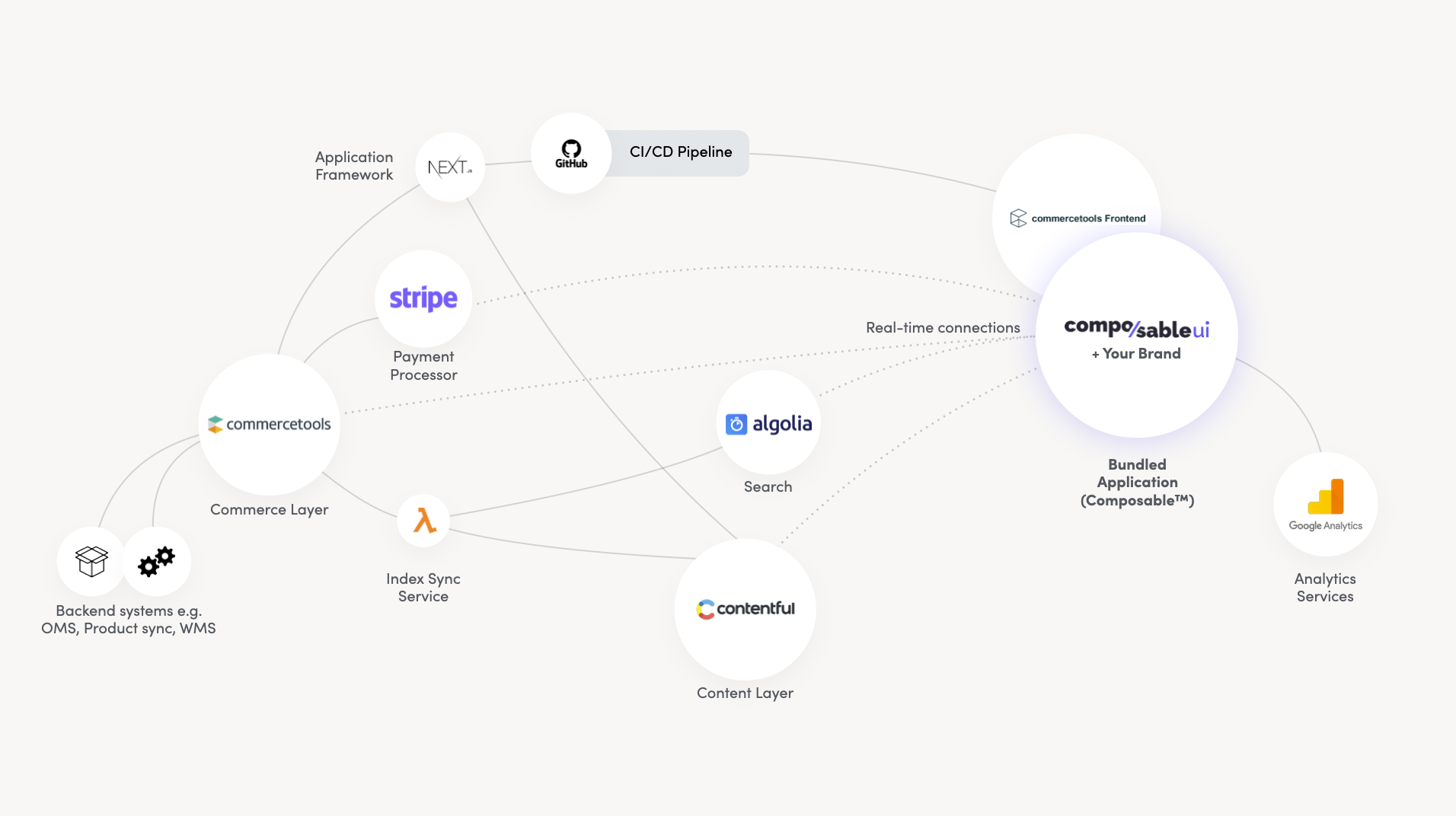
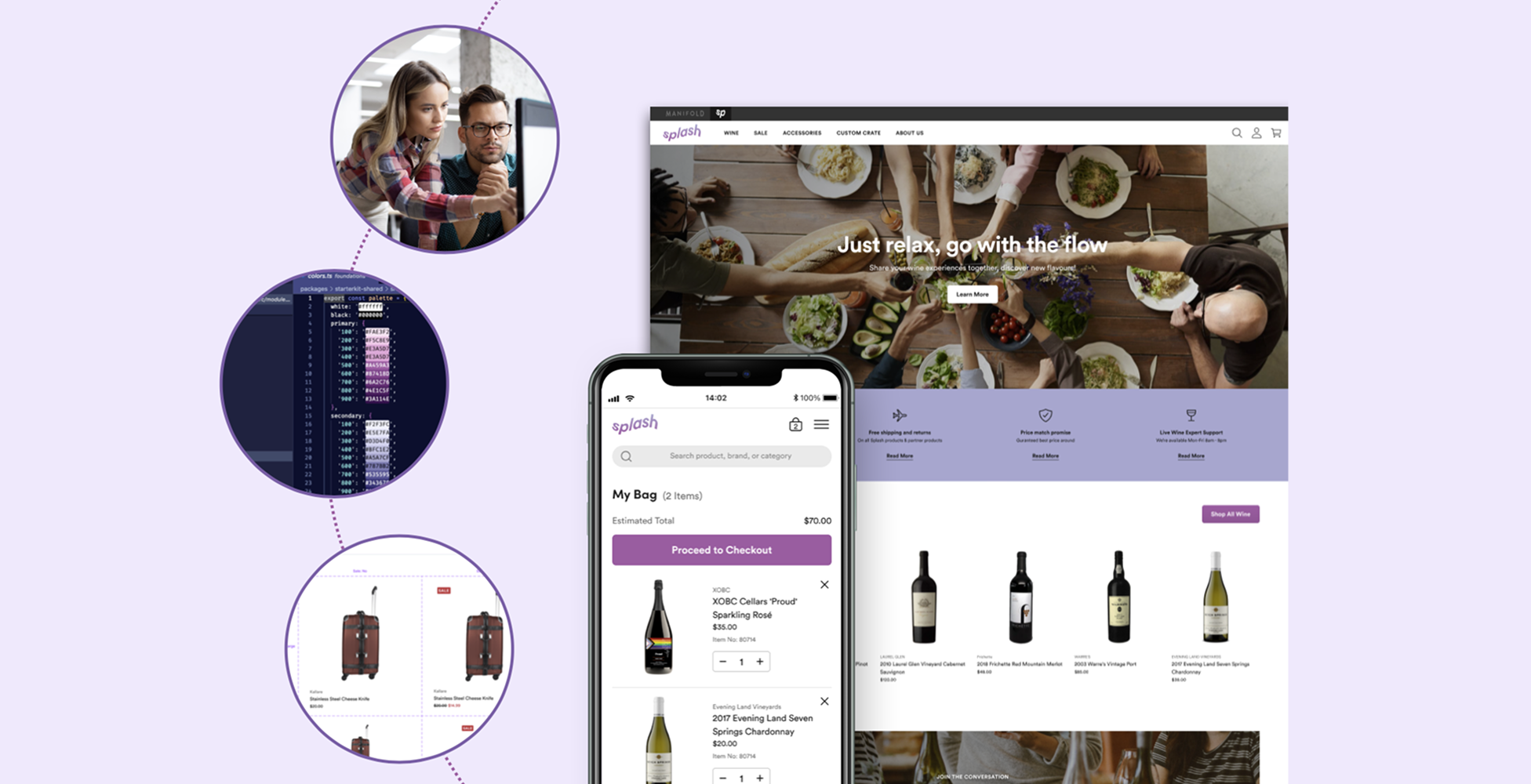
Example storefront custom tech stack

Building the product

Patterns proven through live client work

We weren't trying to standardize every part of a storefront. We were defining the repeatable foundation, the experiences every client could start with, while leaving room for the parts that genuinely needed to be bespoke or brand-specific. Real client work was where that boundary got proven.

What went into the foundation

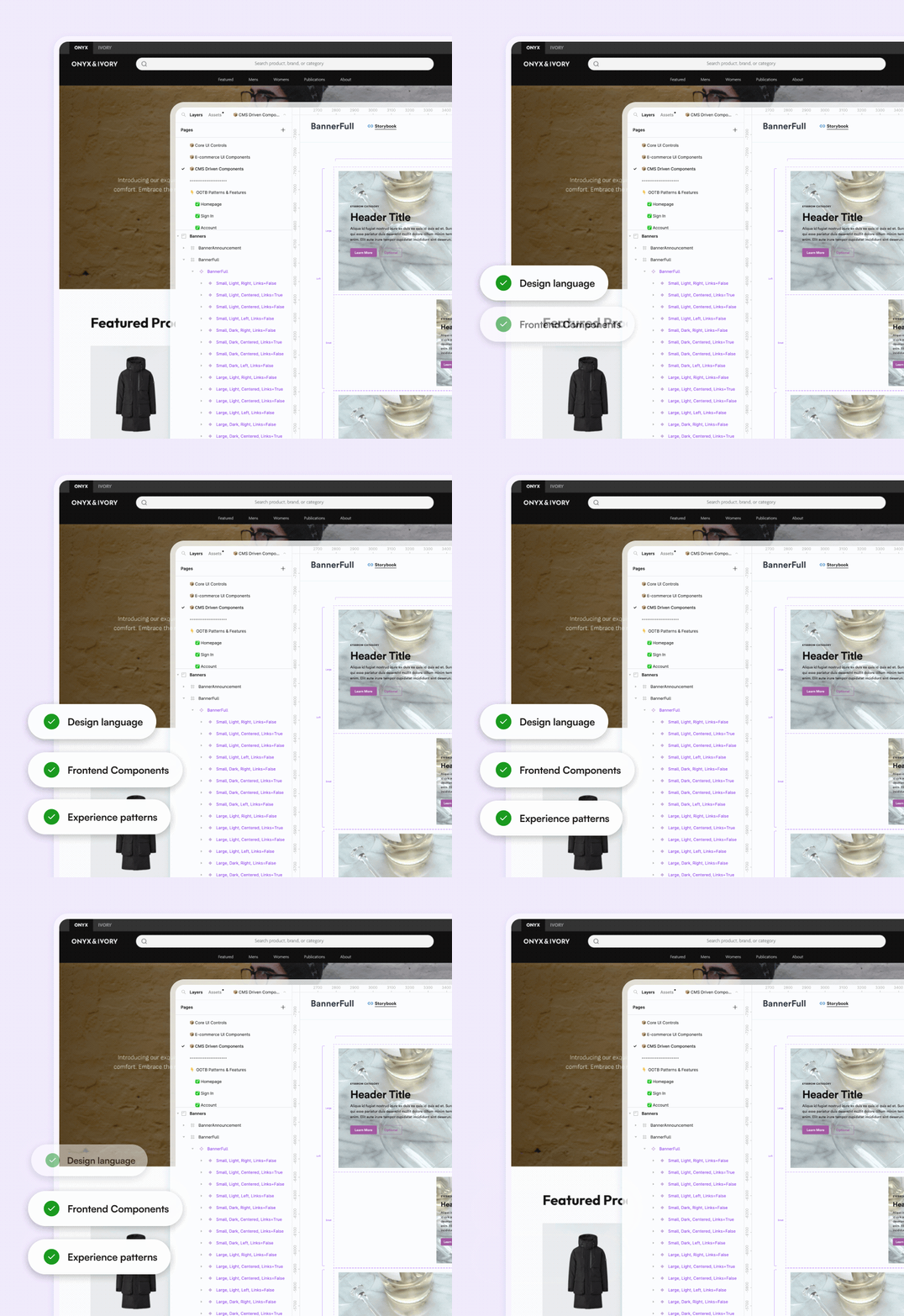
Each pattern shipped pre-configured to headless commerce and content services, cleared for accessibility and responsive best practice, and still customizable to the client's brand. Each was also built for global brands across many languages, bound to flexible content models rather than fixed layouts, and kept swappable, so replacing the search provider, CMS, ERP, or ecommerce engine didn't mean rebuilding the experience.

How it evolved

Going from experiment to scaling up teams that could specialize in using the product.

Yvonne's role in leading the experience design of our Composable Commerce Accelerators and the development of a robust design system starter has had a direct and positive impact on our business and our customers.

Everett Zufelt

VP of product and partnerships

Scaling the practice

A product only scales if the company can use it

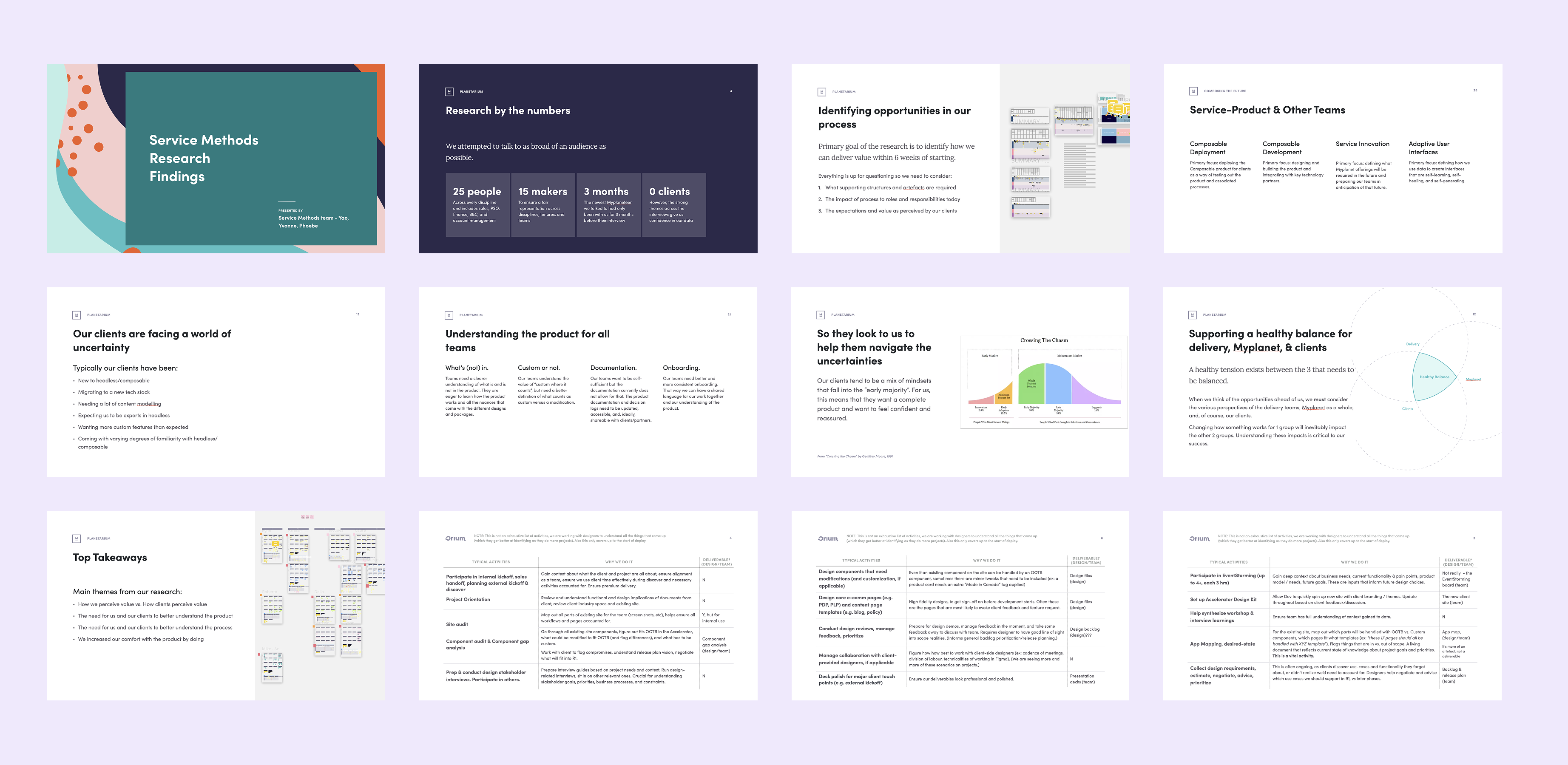
Productizing the software wasn't enough. We had to make it teachable, improvable, and sellable across the company. As a founding member of the Service Methods team, I built the systems that made that possible.

Taught it

Most designers came from bespoke agency work, not commerce. New onboarding, shared language, and frameworks helped them contribute from their first project.

Grow it

I ran design guilds to review new patterns from live client work, refine them, and fold them into the core, so the product improved as teams used it.

Sold it

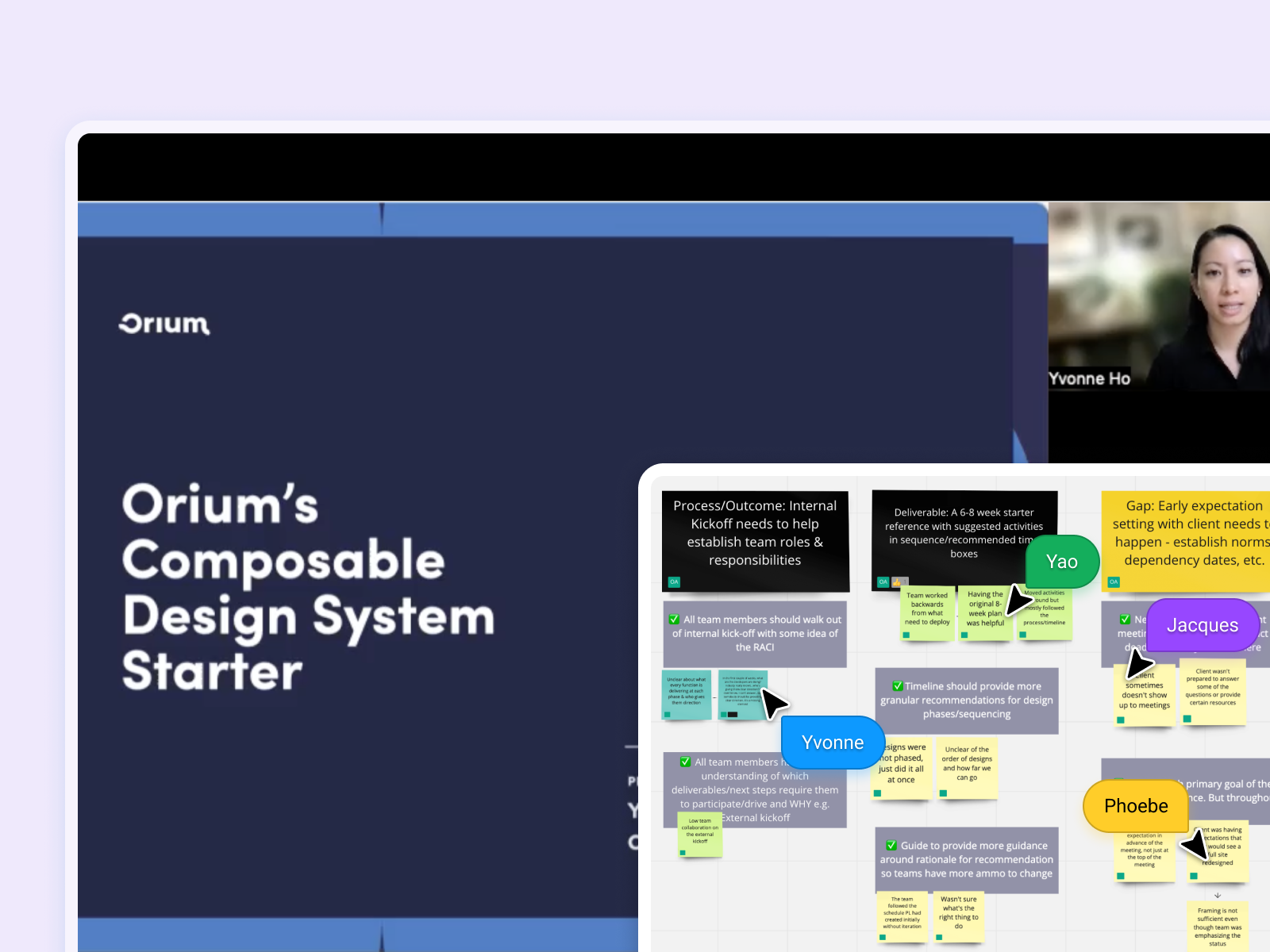
Internal teams and prospective clients couldn't adopt what they couldn't see. I created demos, one-pagers, and generated storefront content tailored by retail vertical. Those materials contributed to winning Kum & Go and ATD.
Laptop screen showing a form to add a first partnering listing with an Add listing button.

Deep dive

The design system

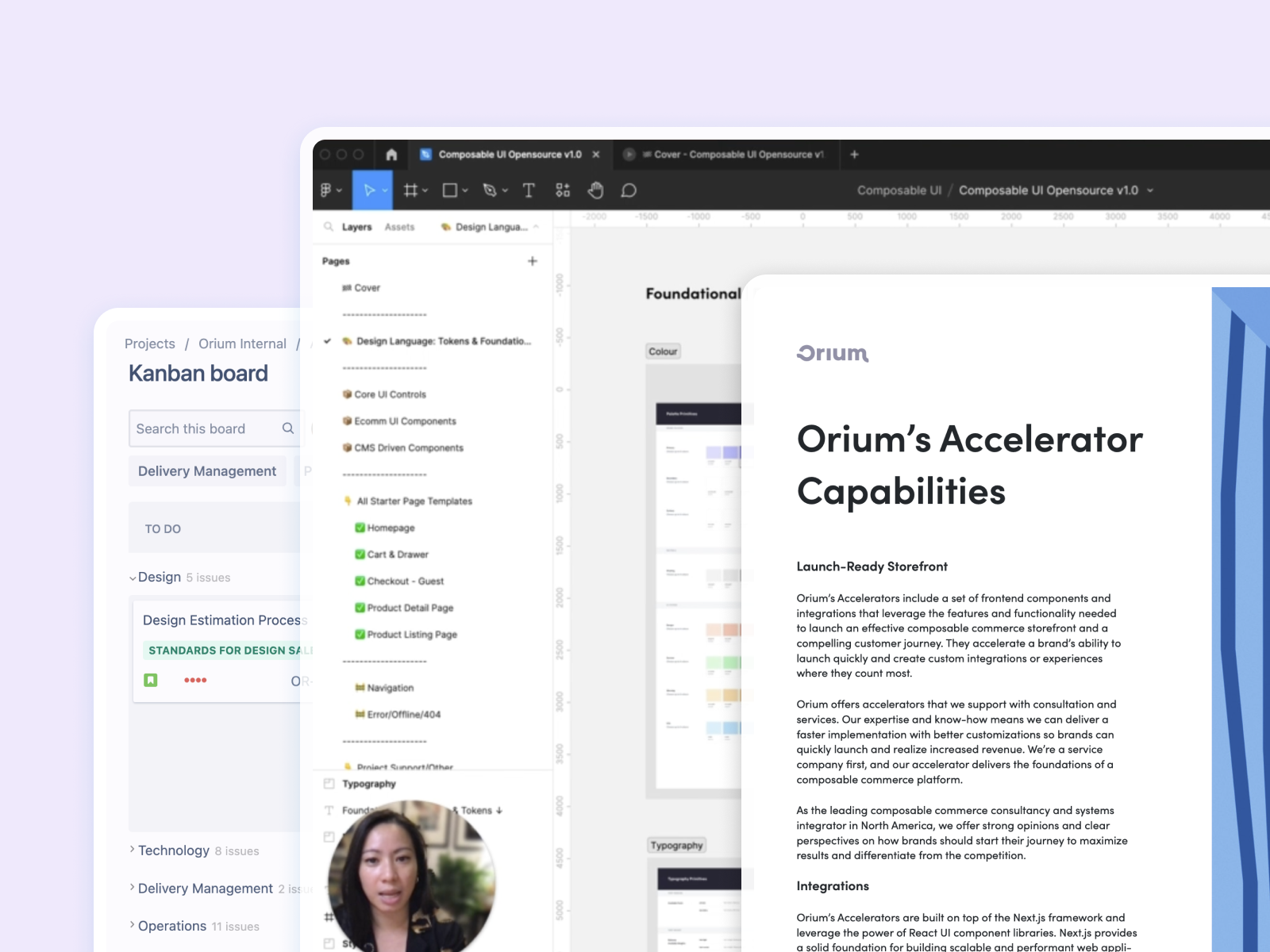
The design system was one part of the product: a Figma design kit and the coded front end it mirrored. The full story of how it was built, and how it stayed aligned to production, lives in its own case study.

The accelerator design system

One Figma kit, mirrored to a coded front end, that aligned design and engineering and grew by every team that shipped on it.

Outcomes

What compounded after I left

The product outlasted the team that built it. Work that began with a roughly two-month bespoke discovery now starts from a working storefront in days, measured at my departure.

Teilor was the first end-to-end build, and effectively the first time we dogfooded our own product after alpha: it saved 2 months, reached a second locale and major new features in 4 weeks, and leveraged 4 pre-integrations. Builds during my tenure also include ISSA, Kum & Go, Cymax, ATD, and OnLogic.

Orium cites 40+ client deployments on the foundation to date, and the accelerator has since expanded into B2B and agentic solutions. That's the real test of productization: the foundation keeps evolving without the original team.

Building in a company from inception through various stages of evolution is something only a handful of people can say they've done, and she's done it in style, with humility and creativity at every step.

Erik von Stackelberg

Chief design officer, Orium

Backed by a $1.2M NSF pilot, I designed AI-generated institution pages that update themselves with zero admin effort, turning invisible research strength into evidence industry could trust.

Learn more