Halo | Overview

Making a research network worth joining

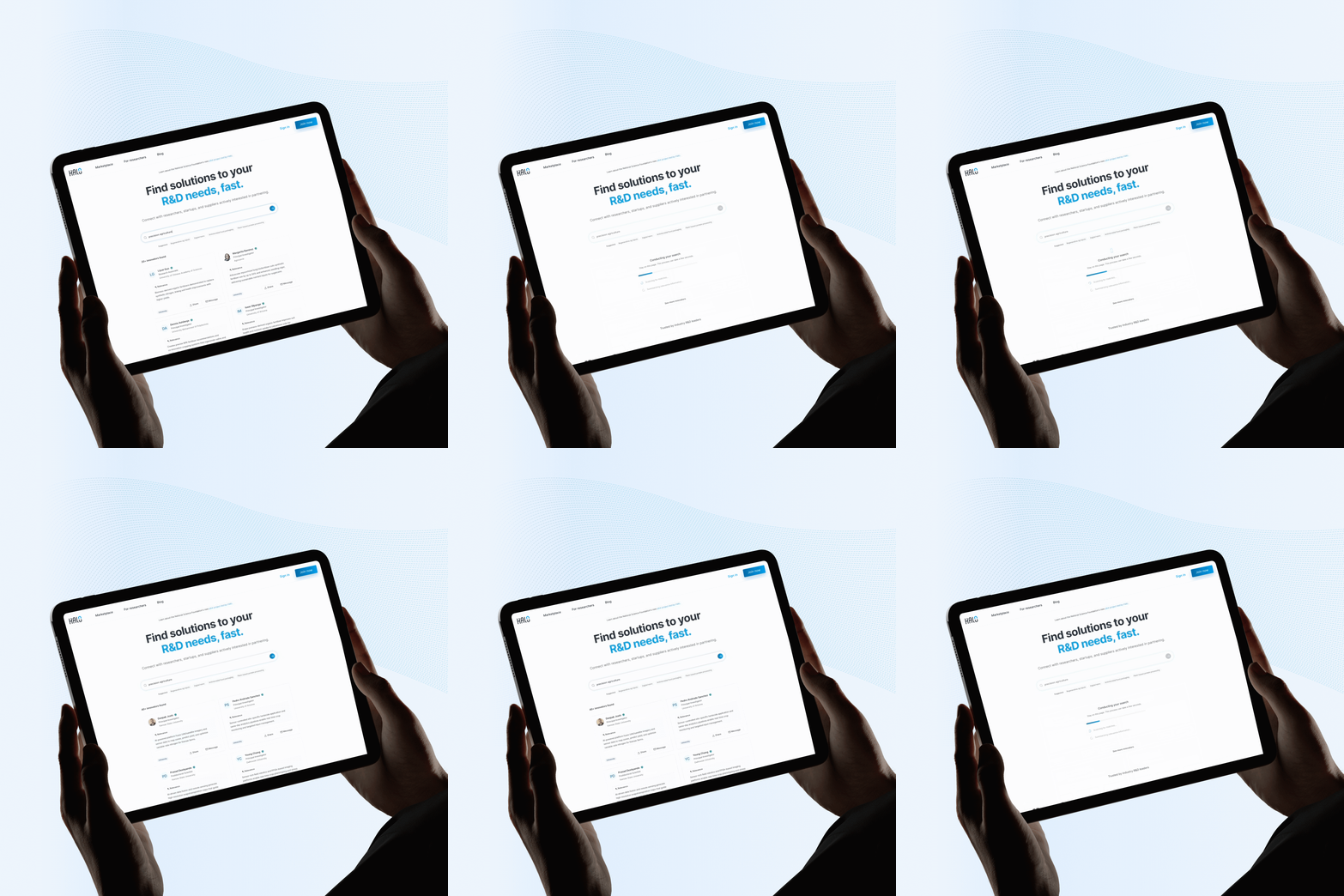
A supply-side growth engine, where every profile, listing, and page makes the next search land better.
2025–2026
Senior product designer
Two-sided marketplace, three audiences

;tldr

Summary

A marketplace is only as good as what people can find. Halo had the demand and the researchers, but the two couldn’t find each other. The answer wasn’t a smarter feed—it was enough verified supply to make the platform worth returning to. As the primary designer on the supply side, I shaped the connected surfaces that turned every profile, listing, and institution into a stronger network.

Problem

An always-on feed is only as good as what's behind it. It has to keep surfacing something worth returning for, and that takes supply. Demand was proven, but verified supply wasn't. Discover could reach researchers beyond Halo's network, but they hadn't joined, verified their expertise, or signaled they were open to partnering. Without enough relevant, on-network supply, there was little reason for anyone to come back.

Solution

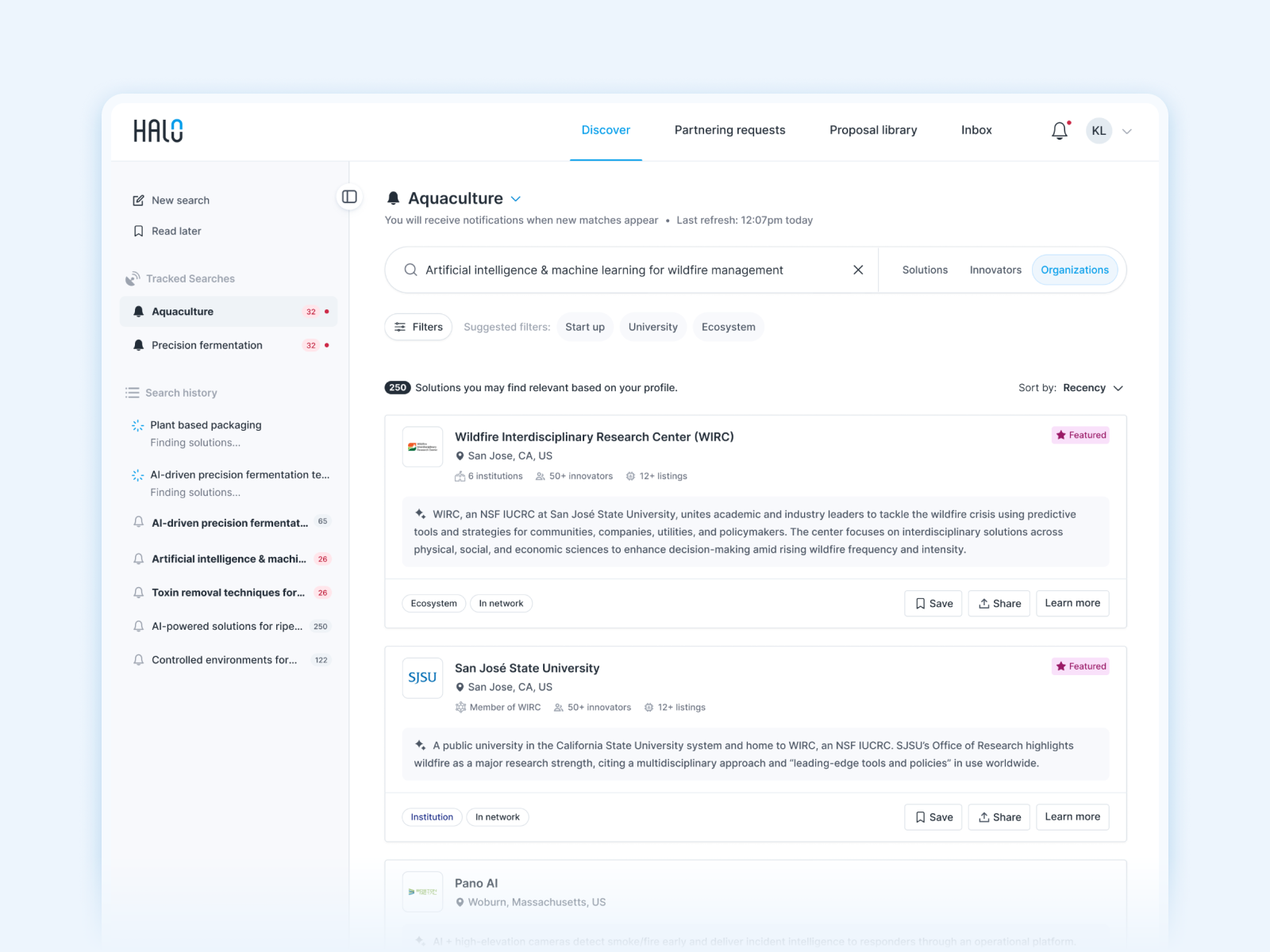
Build a flywheel. I shaped the connected supply-side surfaces so each one feeds the next: every new profile, listing, and institution makes Discover more useful, which brings industry back. On the other hand, this also gives innovators more reason to be on the platform knowing they have visibility to industry. It all builds toward Discover 2.0, the always-on destination for solution scouting, landscaping, and discovering emerging capabilities.

My role

I owned design across Halo's supply-side surfaces, reporting to the Head of Product & Design, at a 3:1 engineering-to-design ratio.
  • Owned · Partnering listings, institution and org pages, network search redesign, end to end
  • Prototyped · Discover 2.0, the destination those surfaces were building toward
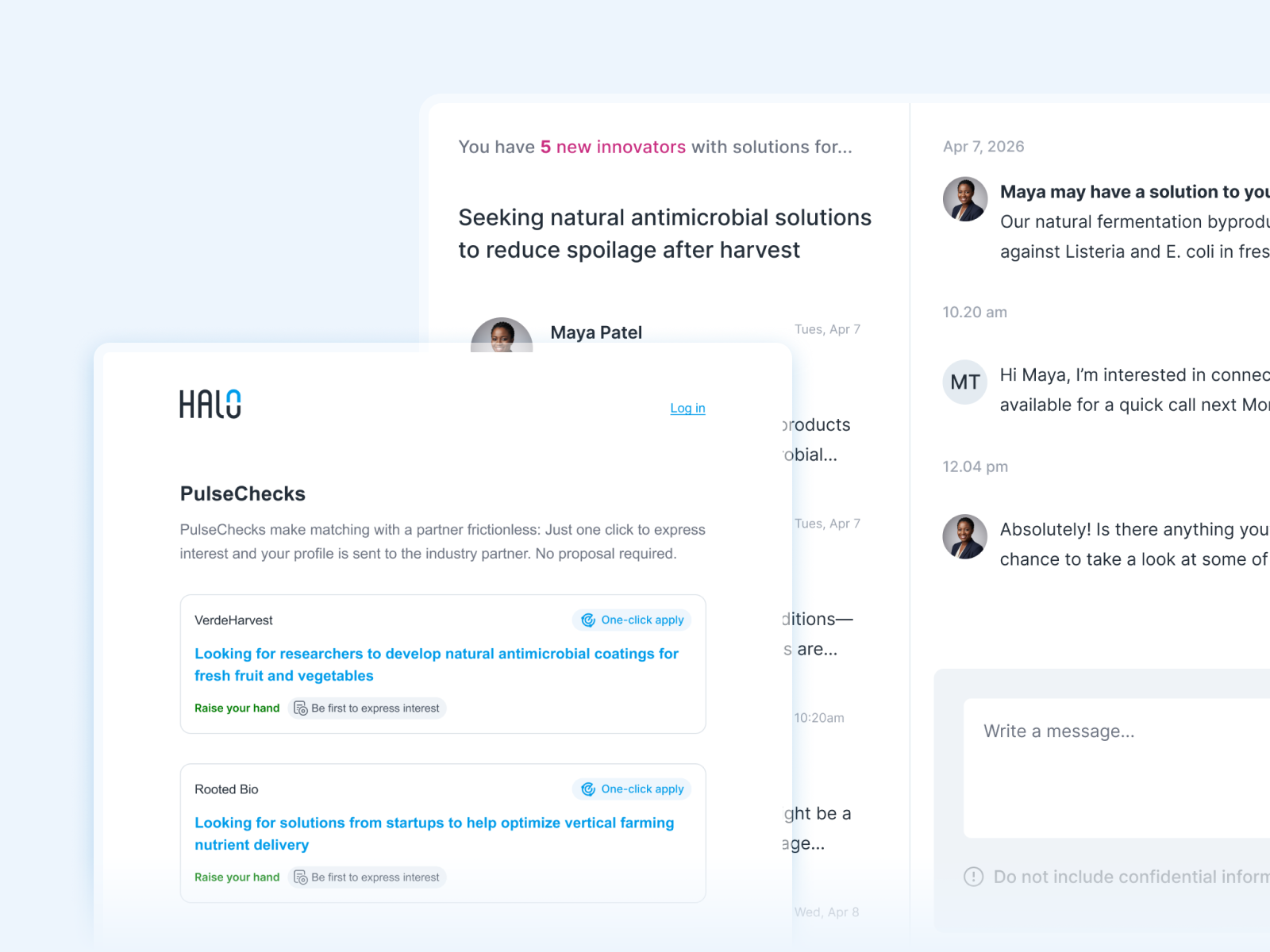
  • Supported · PulseChecks

Impact

Network size

~15.7K

innovators today, ~8,000 innovators in 2024

Growth

+33%

over ten months, 34 enterprise R&D teams

New profile claims

4x

claim-your-profile activity from the enrichment flow

What changed

5

surfaces designed, 4 shipped

Laptop screen showing a form to add a first partnering listing with an Add listing button.

The intelligence layer for R&D discovery

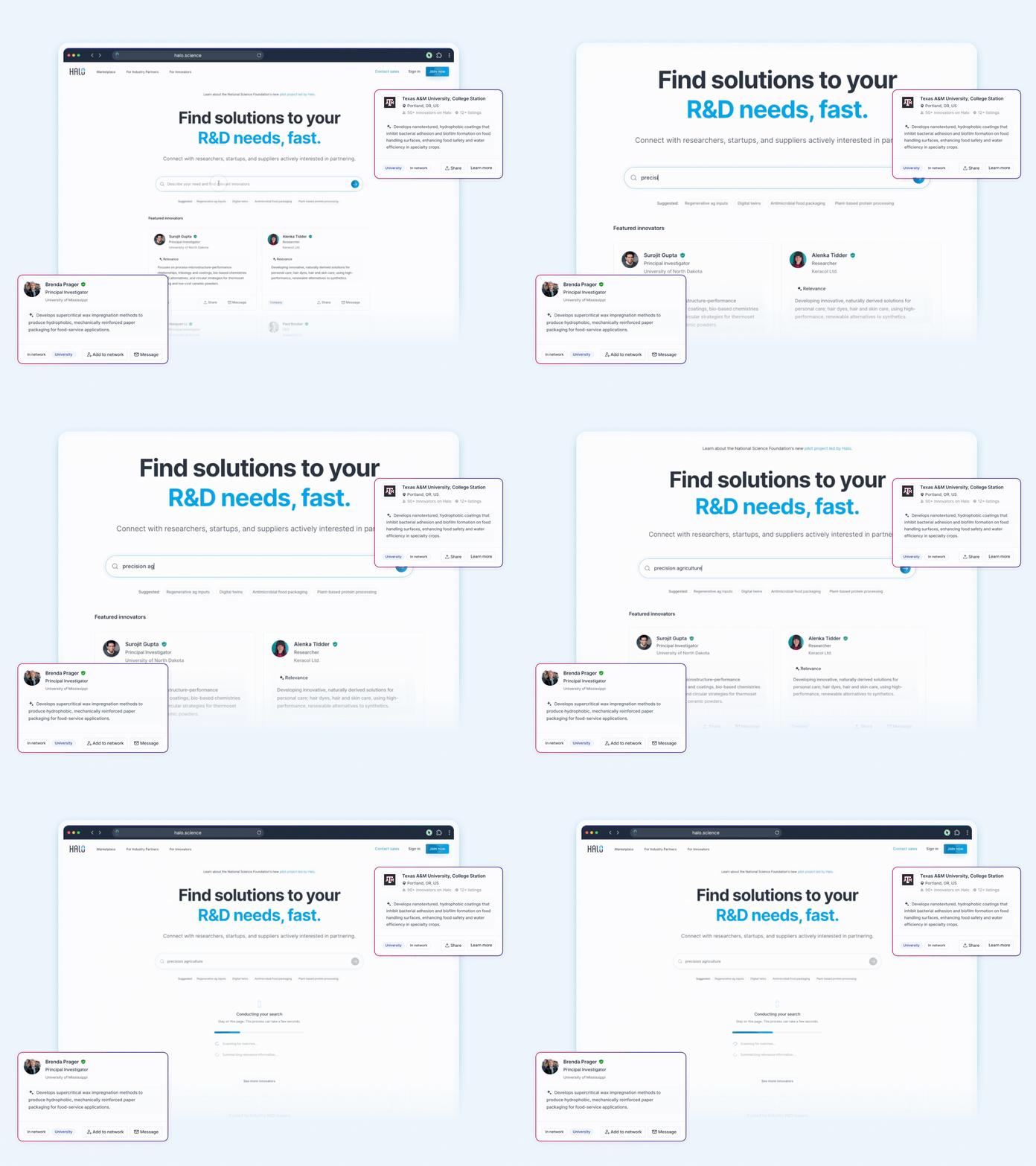
Discover surfaces proprietary, on-network research, not the public results anyone else can find.

Four big takeaways

Strategy

Turning discovery into a reason to return

The strategic bet was bigger than better search. R&D industry experts currently use a patchwork of tools that produce one-shot and generic results. We wanted Halo to be always-on, something teams returned to between projects because it kept surfacing something new and relevant. That only works if there's enough supply behind the experience, so the surfaces were designed to feed a loop.

Audience

Three sides of the same flywheel

Making Discover valuable meant solving three participation problems at once. *Personas are composites built from user interviews.

Needs a reason to return

  • Speed to a solution
  • Passive discovery between projects
  • Relevant science over pitch

"I don't need a prettier pitch, I need to get to the right science fast. And half my job is keeping an eye on who's doing interesting work before I even have a project for it."

Ivan

Director of Open Innovation

Needs a reason to be found

  • Visibility without self-promotion
  • Expertise that stays current
  • Make industry connections

“I’ve spent whole weekends on proposals and heard nothing back. Not a no, just nothing. Marketing myself isn’t the job, and it isn’t what I’m evaluated on.”

Roshi

Principal Investigator

Needs a scalable way to represent supply

  • No marketing budget
  • Represent many researchers at once
  • Fewer manual leads

"I'm responsible for showing what hundreds of faculty are working on, with no marketing budget and a team too small to even keep track of it all."

Amy

Technology Transfer Office

The work

Five connected surfaces built the flywheel

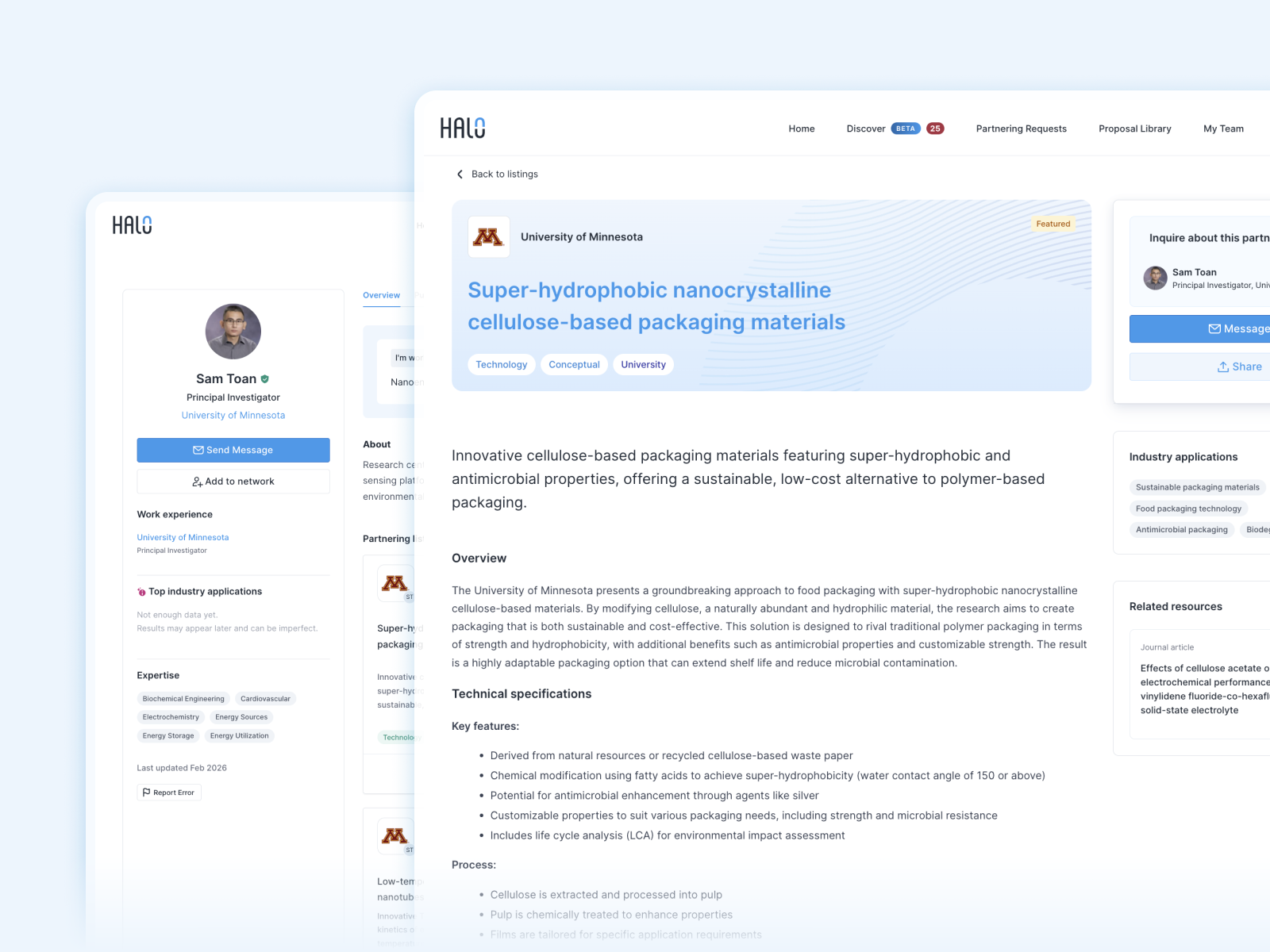
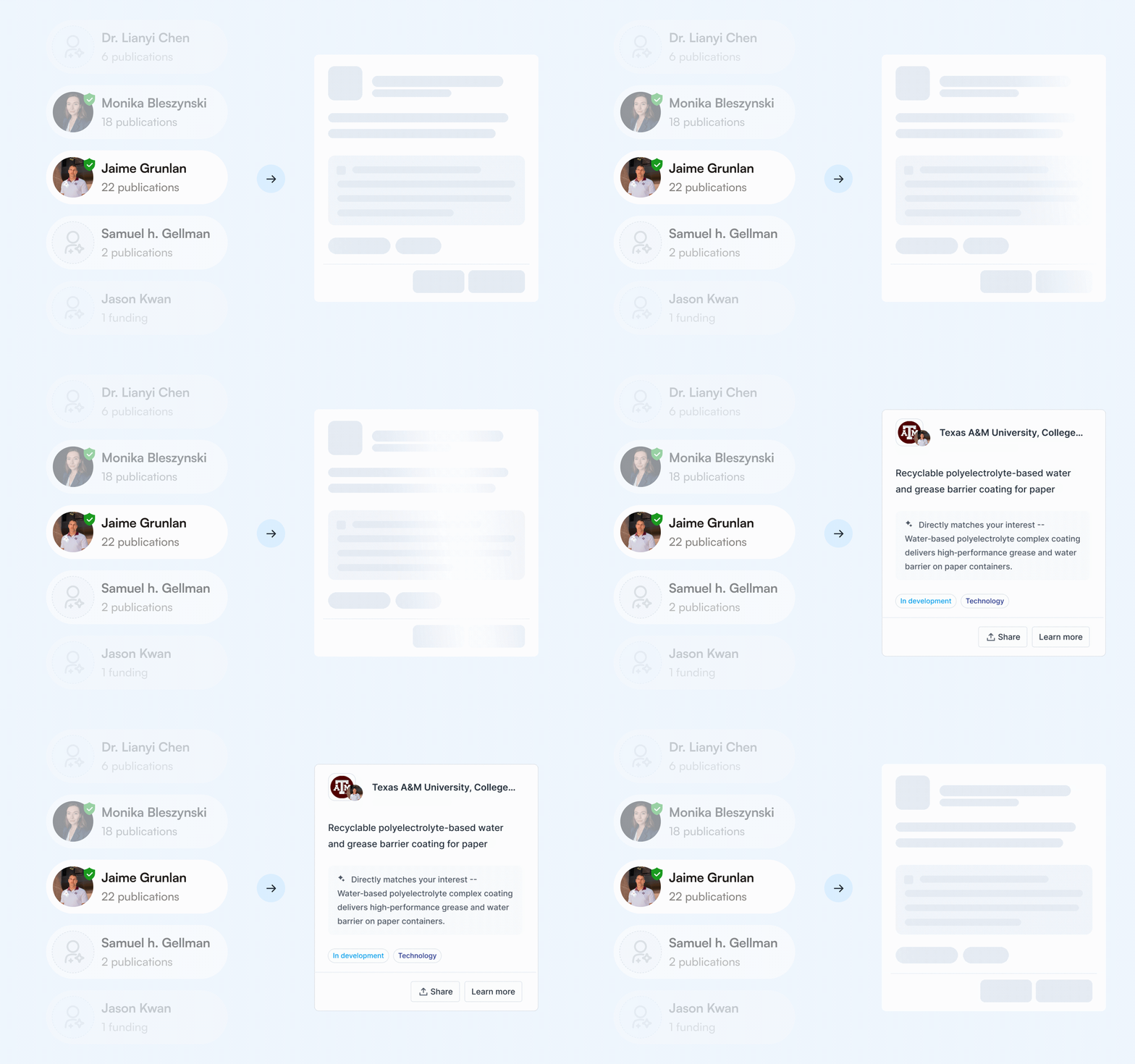
The supply problem couldn't be solved with one feature. Over the last two years, I shaped five connected surfaces, each addressing a different part of the loop.

Results

What changed for each side

The same three sides, after the work.

Before:

Search scattered across generic tools and cold outreach.

After:

Discover surfaced relevant researchers, organizations, and opportunities already connected to the network.

"We were engaging with several other companies whose capabilities have become 100% obsolete. Halo is building on proprietary data, real ecosystems, real connection and creating real value. This capability is very unique. There is no overlap with anything else."

Dimitris Lykomitros

Innovation Collaboration & Partnerships, Cargill

Before:

Invisible expertise, little time to market themselves

After:

Structured profiles and opportunities find them.

"I submitted a brief and ended up pitching to a company I'd never heard of. Now we're in the final stages of negotiating a quarter-million-dollar research project."

Paul Westerhoff

Principal Investigator, Arizona State University

Before:

Manual effort to represent every researcher.

After:

Institutional supply could be built and maintained from existing public evidence. No maintenance required.

"This is exactly the resource that my partnership office needs to act as a navigator and matchmaker for research and industry."

Olusola Fasunwon

Director, Research and Innovation Services, University of Lethbridge

What's next

An always-on destination

The supply-side work changed what Halo could be. Researchers who had been invisible became discoverable, industry teams could find solutions and experts beyond what conventional scouting surfaced, and every new piece of structured supply made the network more useful. Real partnerships are forming, with deals now in active negotiation.

That created the foundation for Discover 2.0: an always-on destination where search, organizations, people, and opportunities become one continuously improving discovery experience. The supply work came first, because Discover could only become valuable once there was enough worth discovering. I prototyped and tested that destination.

The goal was never just better search. It was discovery that kept working after the search was over.

Anyone can use tools like ChatGPT for scouting, but those tools take a half-hour just to get the prompt right, and even then they don't necessarily produce the right types of information. Discover on Halo learns what I'm looking for and continuously monitors on my behalf.

Dave Almy

Senior R&D Director, Neogen

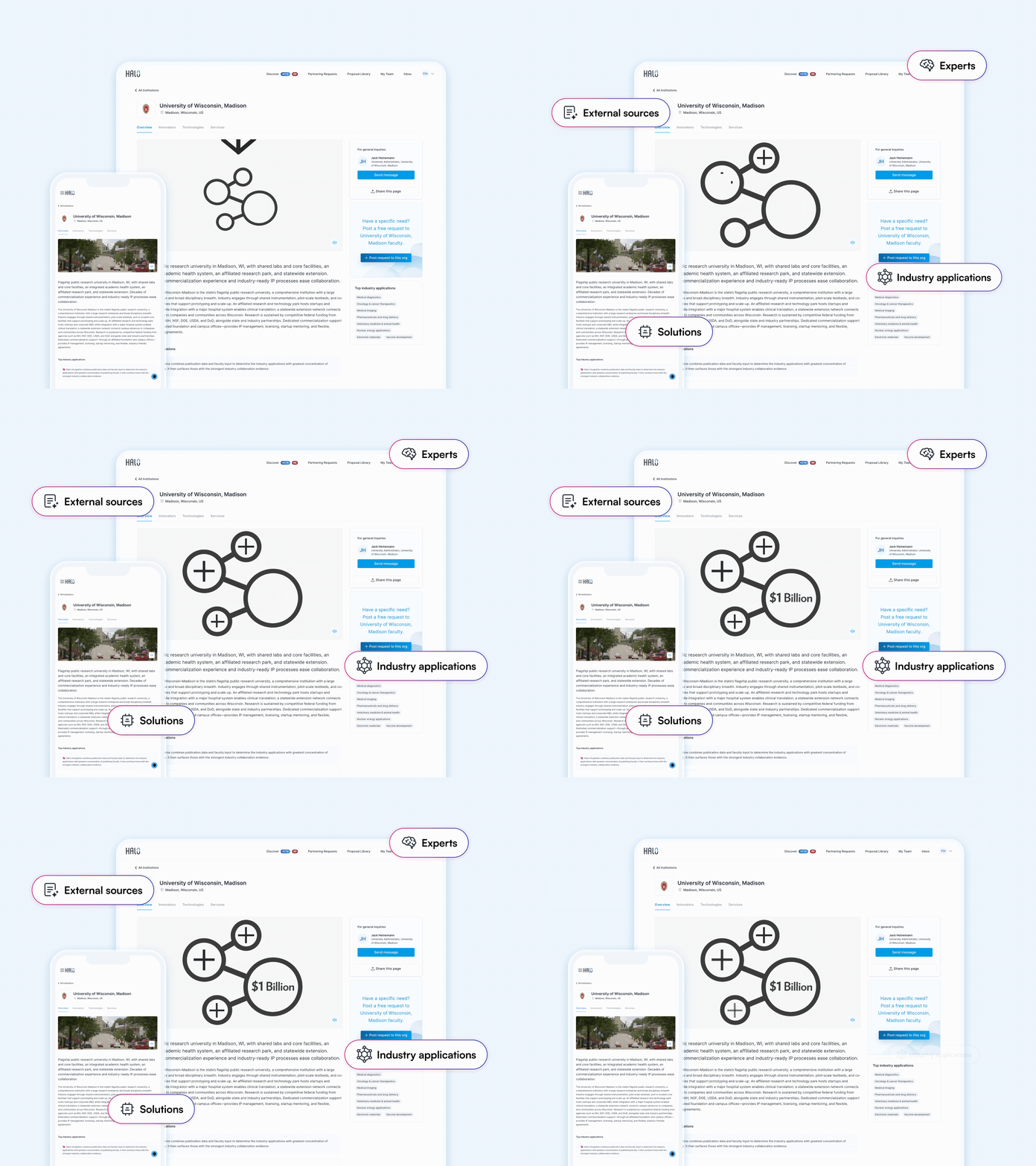
Backed by a $1.2M NSF pilot, I designed AI-generated institution pages that update themselves with zero admin effort, turning invisible research strength into evidence industry could trust.

Learn more