Halo | Project

Creating institution pages that build themselves

Shipped 2025
0→1 product design
Product Strategy
AI Enabled
Senior product designer

;tldr

Summary

I led the product design of Halo's institution pages from 0→1, seeded by an NSF-backed pilot. The idea: make marketing yourself take zero effort. Pages generate themselves from public research data, and an institution only verifies what already exists. What began with universities now covers all types of orgs.

About the platform

Halo is an AI-powered networking platform that connects corporate R&D teams with academic scientists, startups, and innovators to collaborate on scientific research.

Problem

Industry struggles to discover new research beyond the usual institutions. Emerging institutions and startups often lack the resources to market their expertise, while companies default to the same tried-and-true partners. Once they find a researcher, they still don’t know if that person is actually looking to partner—making outreach feel like a shot in the dark.

Solution

Auto-generated institution pages showcasing real expertise, strengths, and partnership opportunities using public data. Institutions just claim and verify their page—no onboarding or upkeep. Meanwhile, industry gets access to novel research competitors haven’t found and a unique database of institutions and expertise, all in the platform they already use to review RFPs and connect with researchers.

My role

I led product design from 0→1, from discovery through validation, across five surfaces. Engineering built the taxonomy and scoring model; I defined what the pages should communicate, what evidence they should surface, and how a generated profile could earn trust. Profile claims grew ~4x, and the model became a foundation for Halo's broader organization discovery.
Impact

Growth

4x

profile claims after enrichment

New profile claims

12 → 51

signups per week after a state innovation-hub launch

Stakes

$1.2M

NSF-backed pilot behind the work

Laptop screen showing a form to add a first partnering listing with an Add listing button.

Every university has a page before anyone signs up.

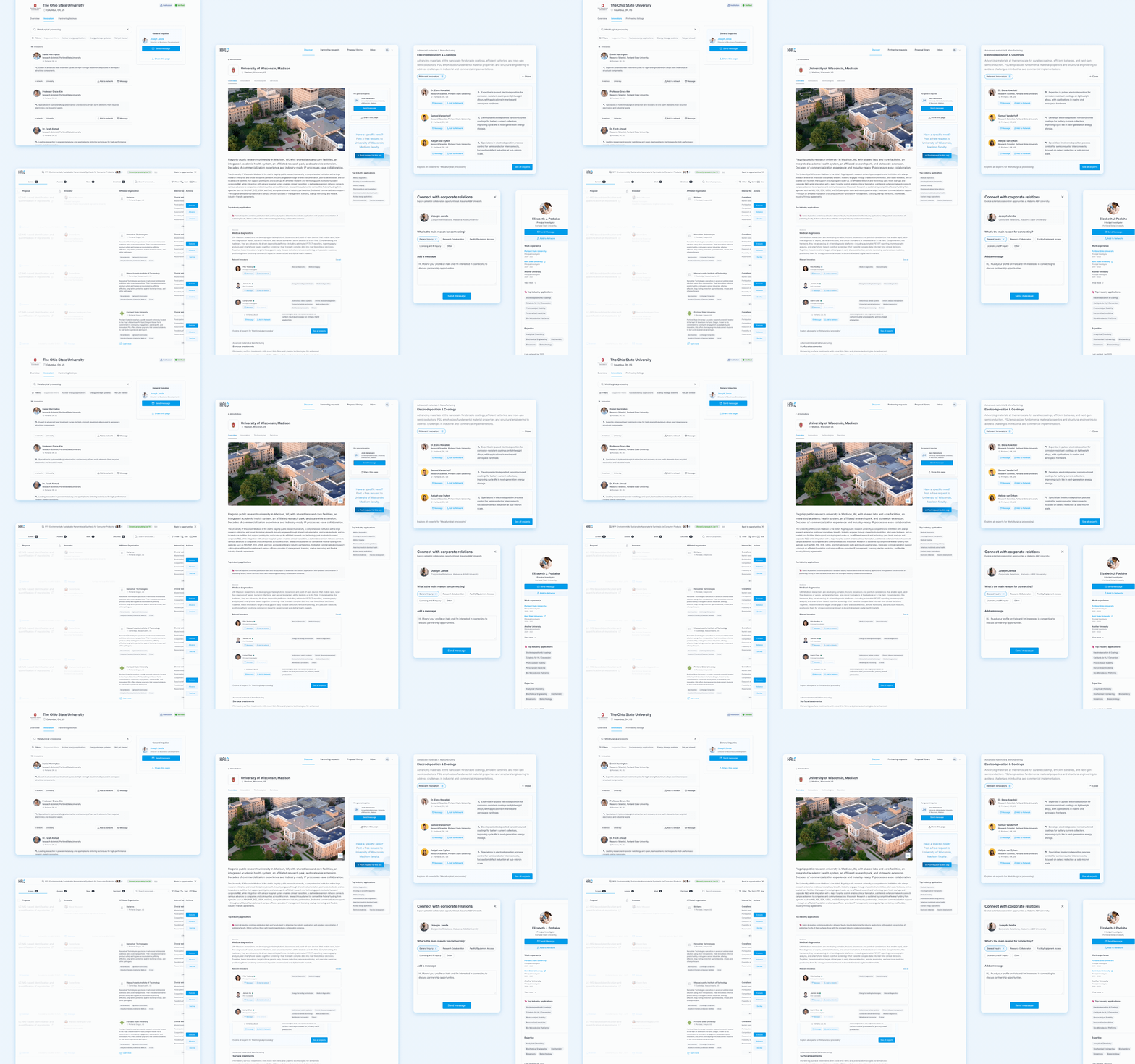
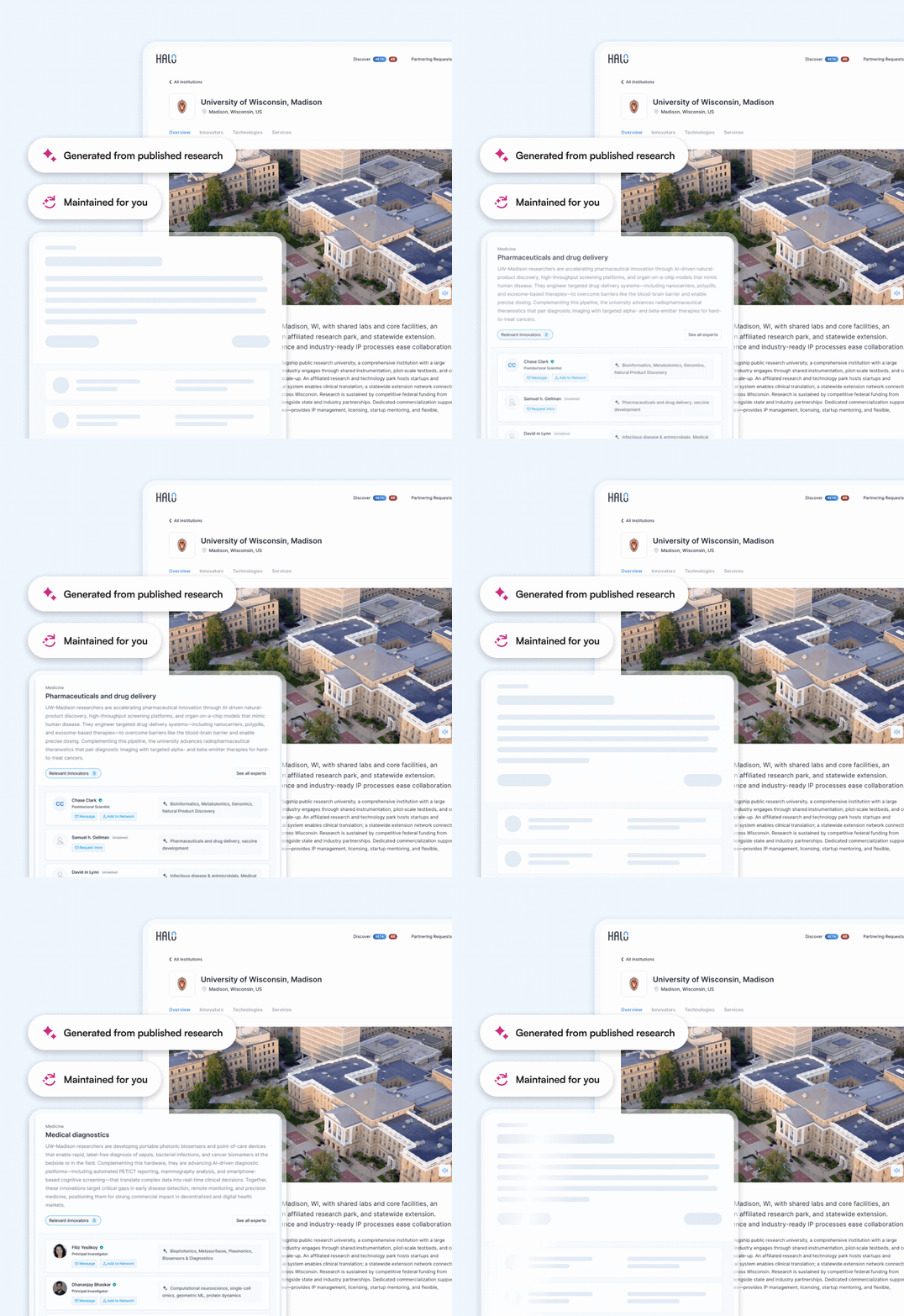
Halo builds it from public sources, proprietary data, and research the academics have already published. The pages keep expanding. Nobody maintains them.

3 min read

Deep dive

The full walkthrough from how the project came to be, to what shipped, and what changed.

Context

Three considerations shaped the product from the start.

Halo had a $1.2M NSF grant to connect industry with researchers at emerging R2 institutions. The team had a research taxonomy, but no scalable way to turn it into marketplace supply.

Reuse the patterns, and build to extend

The pages had to reuse Halo's existing patterns and scale beyond a single page type. We already knew the architecture would eventually support broader organization discovery.

Zero upkeep

It had to be low-lift. Admins often don't know what expertise sits inside their own institution and have no time to maintain anything, so anything requiring upkeep would fail.

Generated content has to earn its cost

Every AI enrichment carried cost, and a wrong or thin claim risked trust and budget. Pages had to feel valuable early, without over-generating.

Challenge

The research was never the problem. Finding it was.

More than 2,000 R2 universities receive only about 10% of corporate research funding. The gap wasn't research, it was discoverability. Institutions lacked the visibility and resources to keep partnership information current, and little capacity to fix that themselves. That is why the pages had to build themselves.

Industry-research partnerships mostly happen through existing relationships and reputation. The challenge was making those connections happen deliberately, especially at institutions industry tends to overlook. The NSF committed $1.2M to an 18-month pilot, measured by real industry-research connections, not pages published.

Approach

Deciding what to build

The technical direction was set: areas of focus and institution pages would be generated programmatically from Halo's research taxonomy. My job was deciding what those pages should say, and how a generated claim could earn trust with a scientific audience.

Engineering and I worked in parallel. They evolved the taxonomy and scoring model while I defined what users needed to understand. I worked through three milestones: survey the field from both sides, consolidate the insights, then align on a recommendation and MVP before designing a feature.

01. Research activities

Survey the field, from both sides.

First, map the landscape. Identify the information partners weigh when comparing solutions, and in reverse, what researchers want to showcase about themselves.

02. Insights

Both sides changed the brief.

Consolidating what industry partners and university admins told us, three findings reshaped the solution.

Areas of partnering strength

Expertise and openness to partner are different signals.

Both industry partners and admins made the point: a university can lead a field and have no interest in commercializing it, so a page built on expertise alone sends industry to researchers who'll never answer.

Built on people, not a score

People were more credible than a score.

People were more credible than a score. Comparison is central to scouting, but neither side wanted a horse-race number. They wanted an objective read grounded in evidence, so the signal rolls up from the experts and their publications rather than a self-reported rating.

Accuracy over a richer page

For a scientific audience, an inaccurate claim isn't unhelpful, it's disqualifying.

We could have auto-generated far more, facility details, extra summaries, richer components. But generating data on an institution's behalf risked being wrong, and wrong is disqualifying. So we shipped a leaner, accurate page instead of a flashier one built on data we couldn't stand behind.

03. Recommendation

A complete slice, from the highest-rated modules

Align stakeholders and the team on one recommendation, and lock the MVP before designing features.

I prioritized the modules that rated highest with users, but the real call was shipping a complete slice rather than a pile of features.

The MVP had to take industry end to end: search and find an institution, see everyone behind it (shadow profiles and people already on the platform), then direct message or send an invite. That whole path had to work first, so partners could actually reach out. Everything ran on evidence we already had, the experts and data in Halo's database, so the page needed no new inputs for institutions to maintain.
"The key aspect here is it's not input by the university. It's something you guys are putting together via an algorithmic search of some sort based on the evidence."

- Industry partner

What shipped, and what didn't:

Shipped: the complete slice

Search, the institution and the people behind it (shadow and on-platform), direct message, and invite to platform.

Deprioritized: personalized strengths and facilities

Both rated highly, but the slice had to ship first so partners could reach out.

Facilities was in high demand

However, it depended on the org page and listings stabilizing. By the time those settled, users had redefined a valuable facilities module around the services a facility provides, not the equipment. Not building this module first saved the rework later.

Solution

Every page rolls up from one unit: the expert.

Halo already had the data needed to build the page. Instead of asking universities to describe themselves, we assembled the page from the experts and evidence underneath it. Three key moves made that work.

Feature

Searchable experts, including shadow profiles

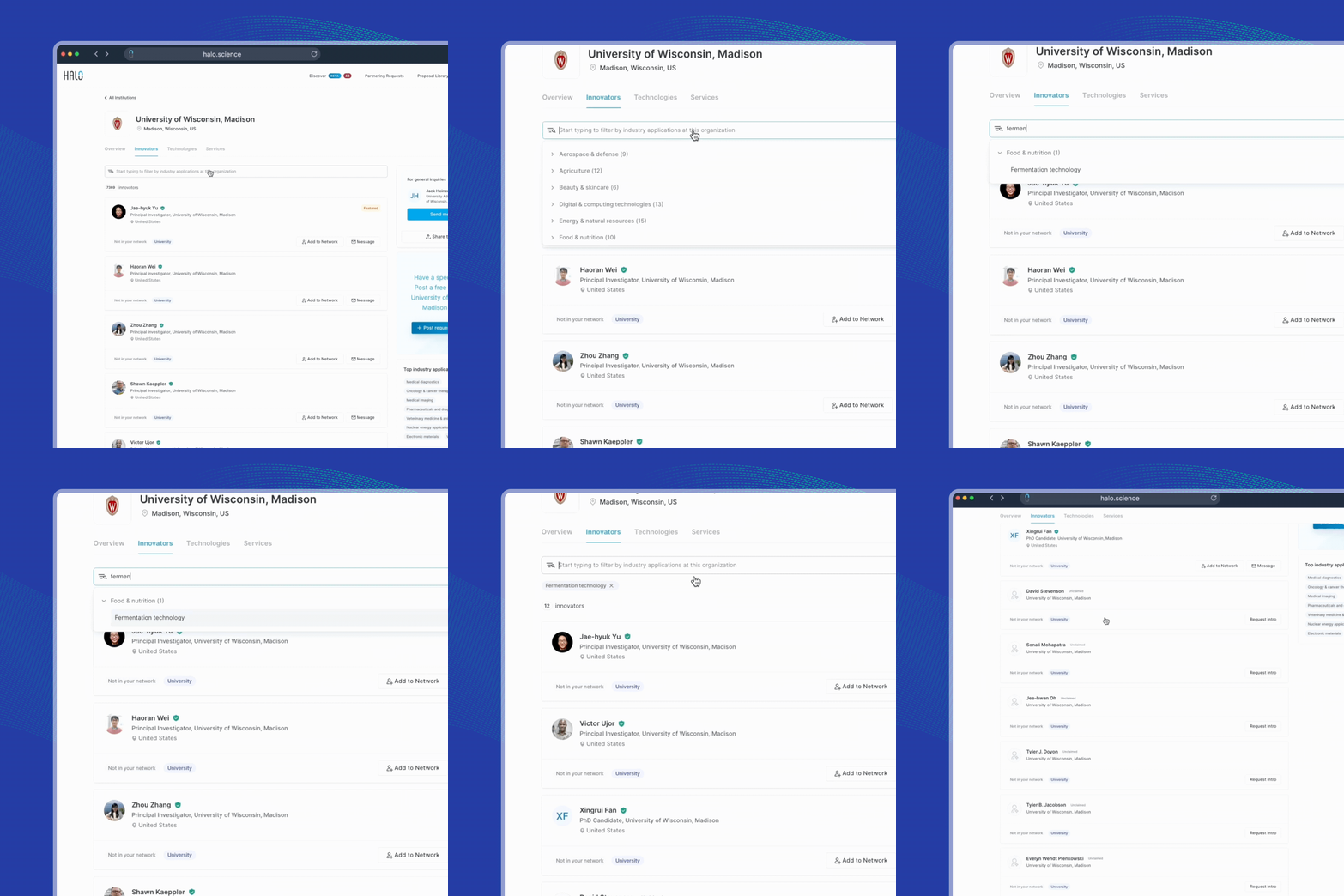
A real database of researchers industry can reference, not a page about an institution. Shadow profiles mean an institution is represented before anyone from it has signed up.

Feature

Areas of partnering strength

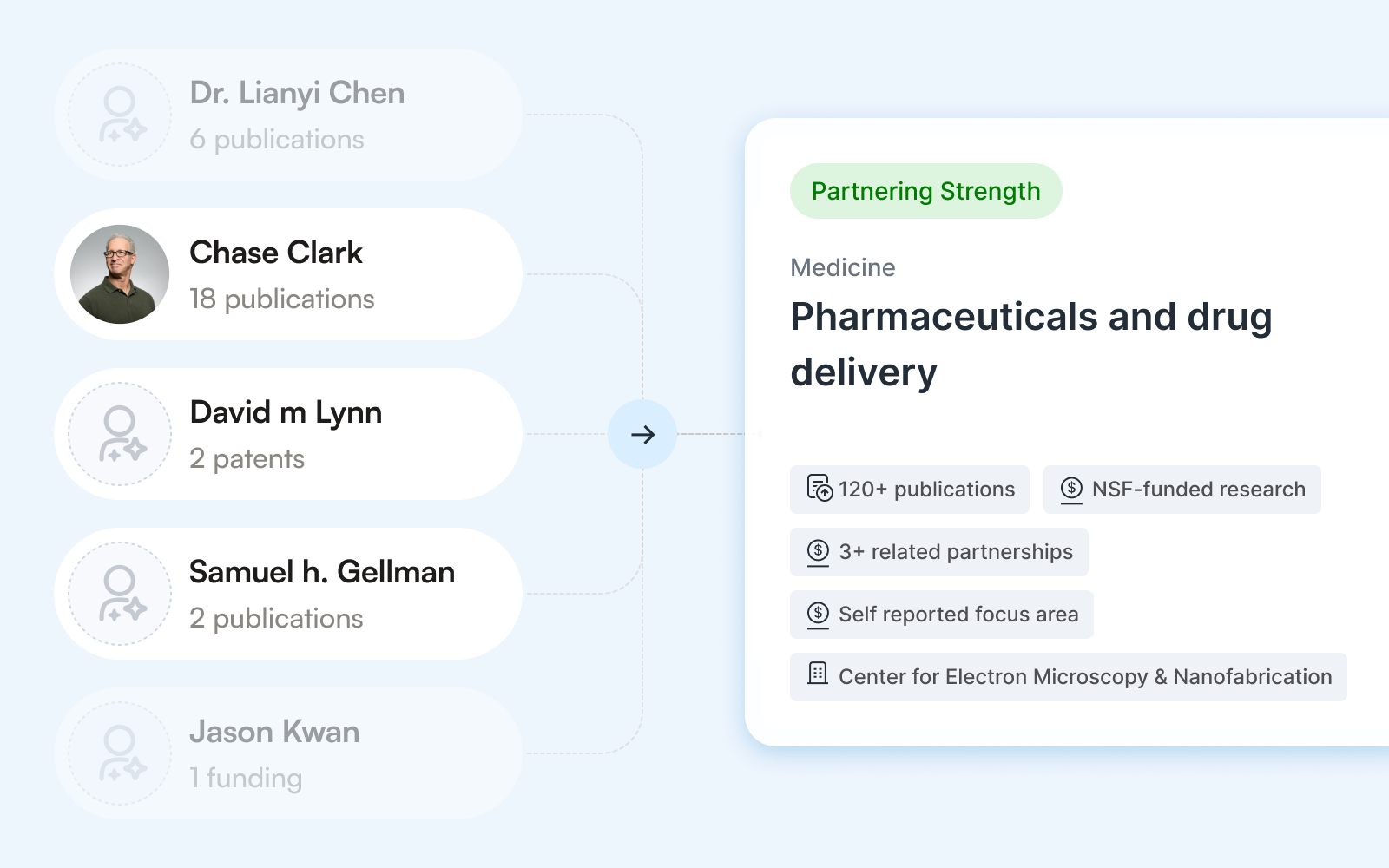
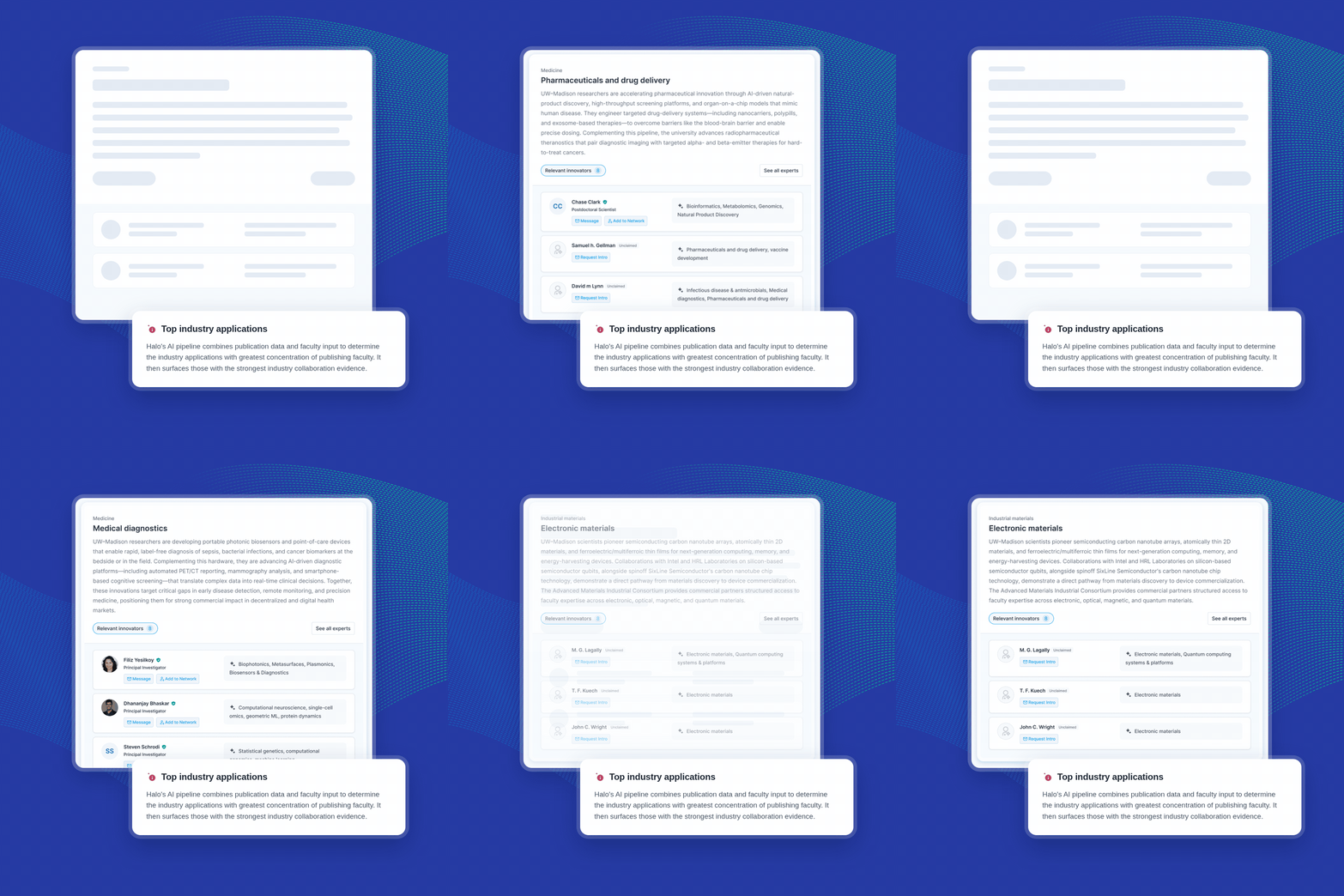
Computed from the expert data underneath, each area is a roll-up of real evidence, so a university can't self-report it and doesn't have to.

Feature

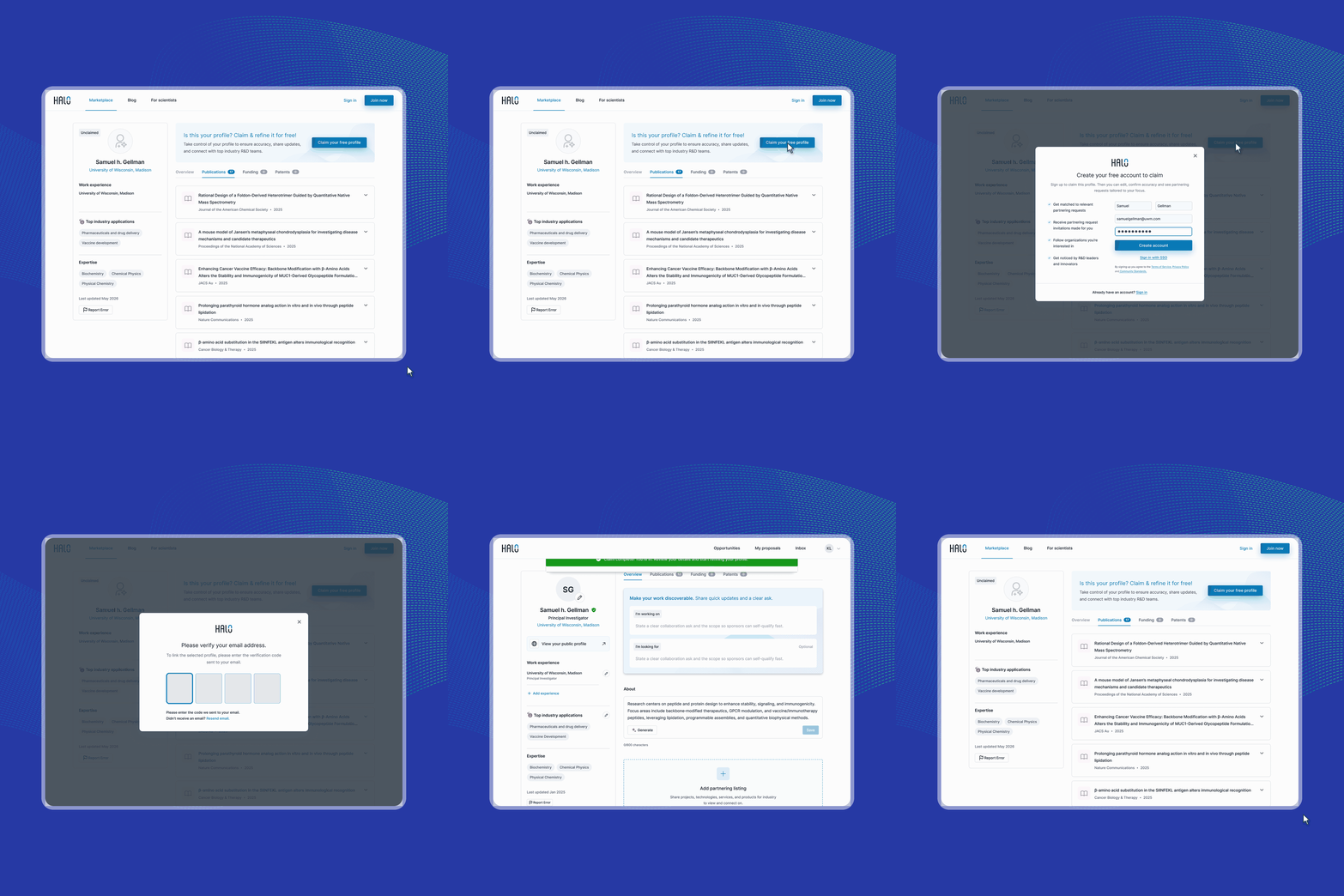
Claim your profile

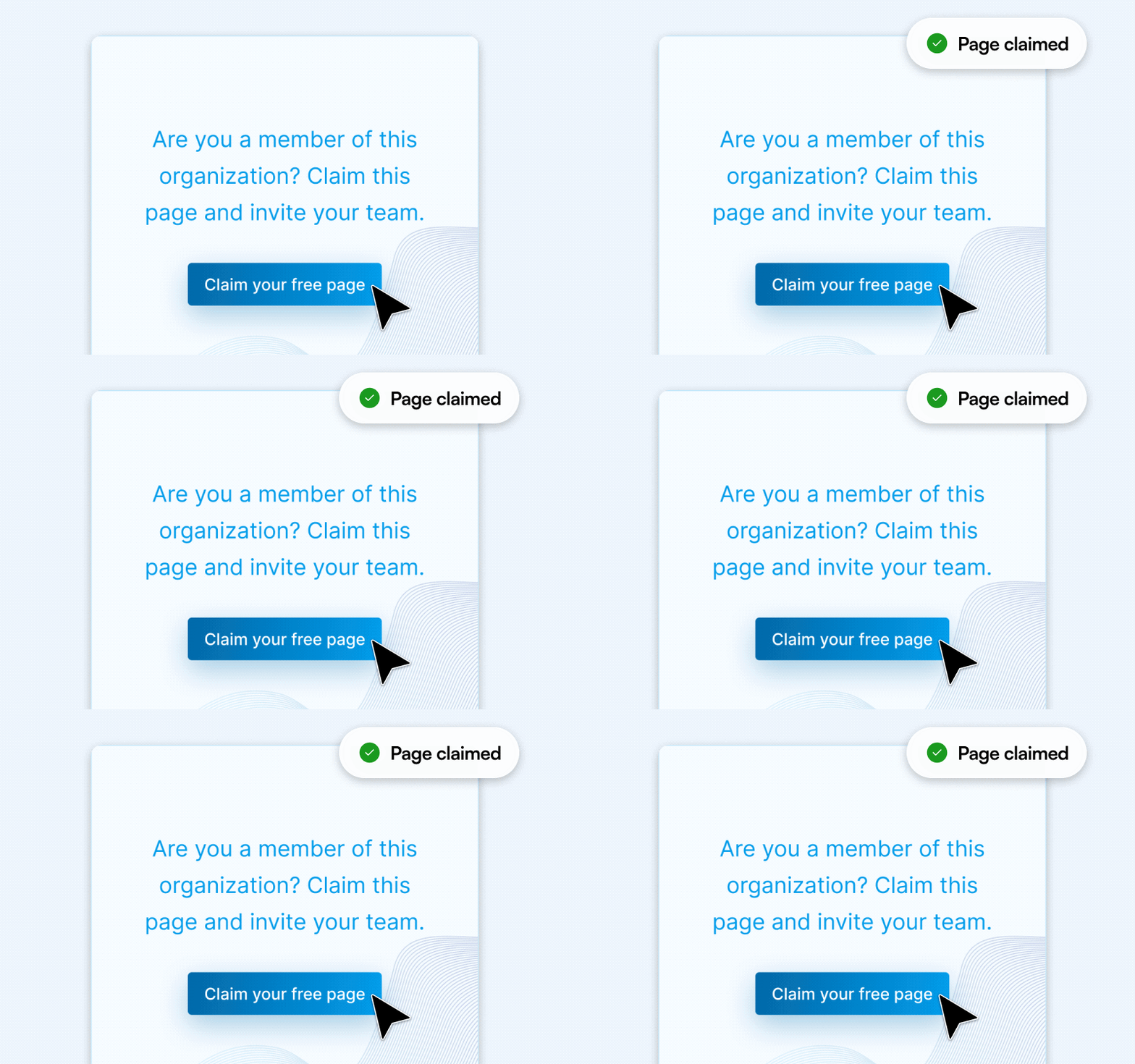
The flow the rest depends on. Profiles are pre-built from public data, so when industry reaches out, the researcher confirms a page that already exists. The design problem was trust: a generated profile has to feel accurate and easy to correct.

Tradeoff: We prioritized evidence-backed expert profiles over broader generated recommendations. The downside was thinner pages early on, so we designed them to degrade gracefully rather than imply confidence we didn't have.

Outcomes

The pages kept growing without anyone maintaining them.

The flow behind the pages turned a one-time build into a network that keeps enriching and growing itself.

Supply generated itself

Researchers only verified an existing profile, so supply grew without ongoing admin work. At a state innovation-hub launch, claim activity roughly 4x'd, from ~12 to 51 a week.

The model expanded

The same evidence-based approach became the template Halo reused beyond universities, for startups and suppliers.
*Note: orgs pay for a featured tier, evidence that being more discoverable to industry is worth budget.

It became part of Halo

Institution pages became one surface feeding organizations search, part of Halo's broader organization discovery, and one of the surfaces Discover 2.0 unifies into a single always-on feed.
This is exactly the resource that my partnership office needs to act as a navigator and matchmaker for research and industry.

Olusola Fasunwon

Director, Research and Innovation Services, University of Lethbridge

Self-serve listings that turn a researcher's IP into something industry can actually find.

Learn more